


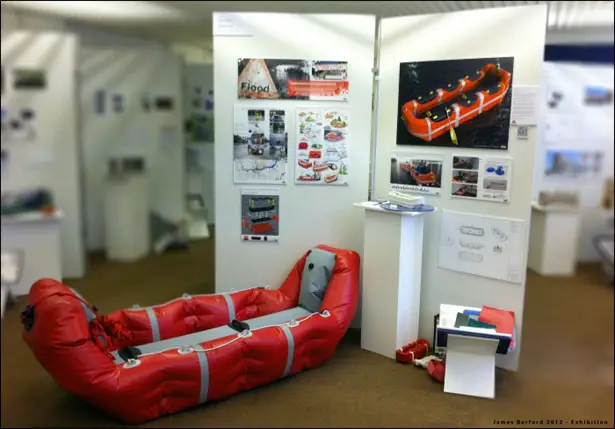
The Floodhopper has been designed for flash flood disasters areas. Its main features that make it different from other rescue boats, is that it can be inflated from inside the home or the occupied building. This life raft is capable of feeding through narrow stairways and doorways, enabling the victims to escape in safety without entering the cold flood waters. It can be inflated using a small compressed air canister, and automatically inflates like today’s lifejackets. The user then uses the supplied folding paddles to maneuver through debris and onto open water.
The main goal would be that a whole community that lives in a high flood risk zone would have Floodhopper within their home, for those just in case situations. These rafts would then link together as a modular ‘train’, so the emergency services could then pull them to further safety if needs be.
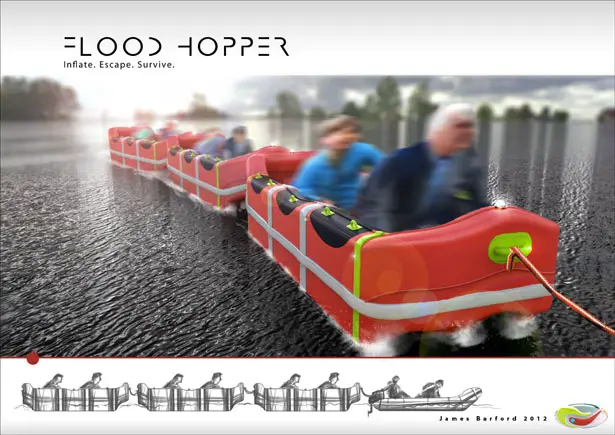
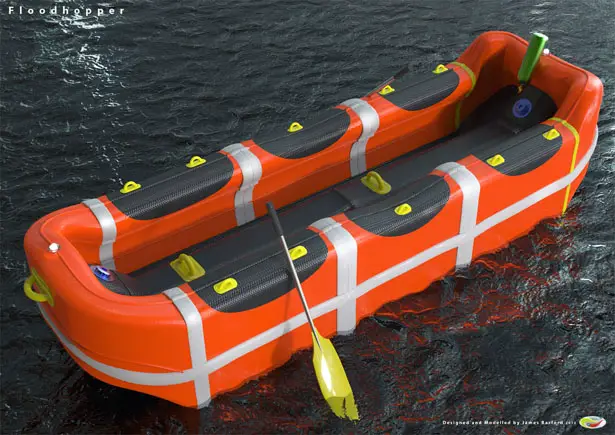
The benefit for a self rescue option when in such a disaster, is that when a flood happens, the rescue services are inundated with SOS calls. With FloodHopper design by James Barford, it can relieve the rescue attempts on able bodied users, and allow the rescue services to get to the elderly and disabled. Its potential for international recognition would be massive with the increase in flooding and its relation to global warming.
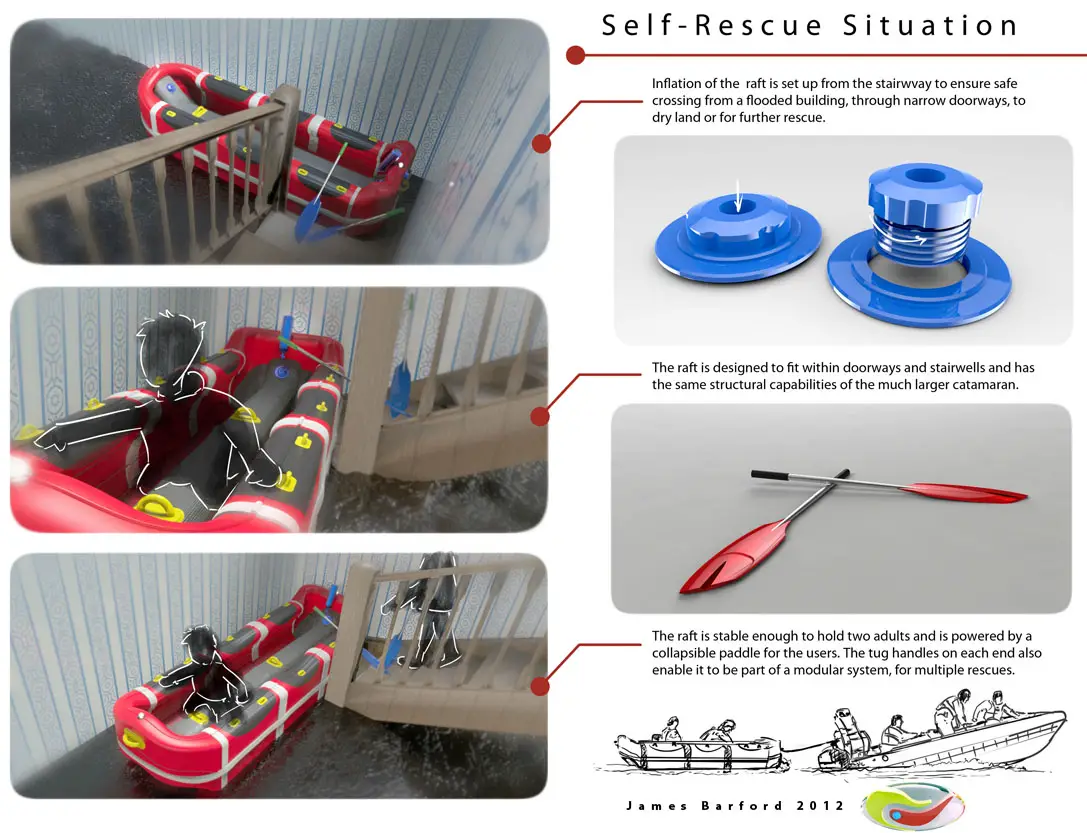
Click above image for bigger view
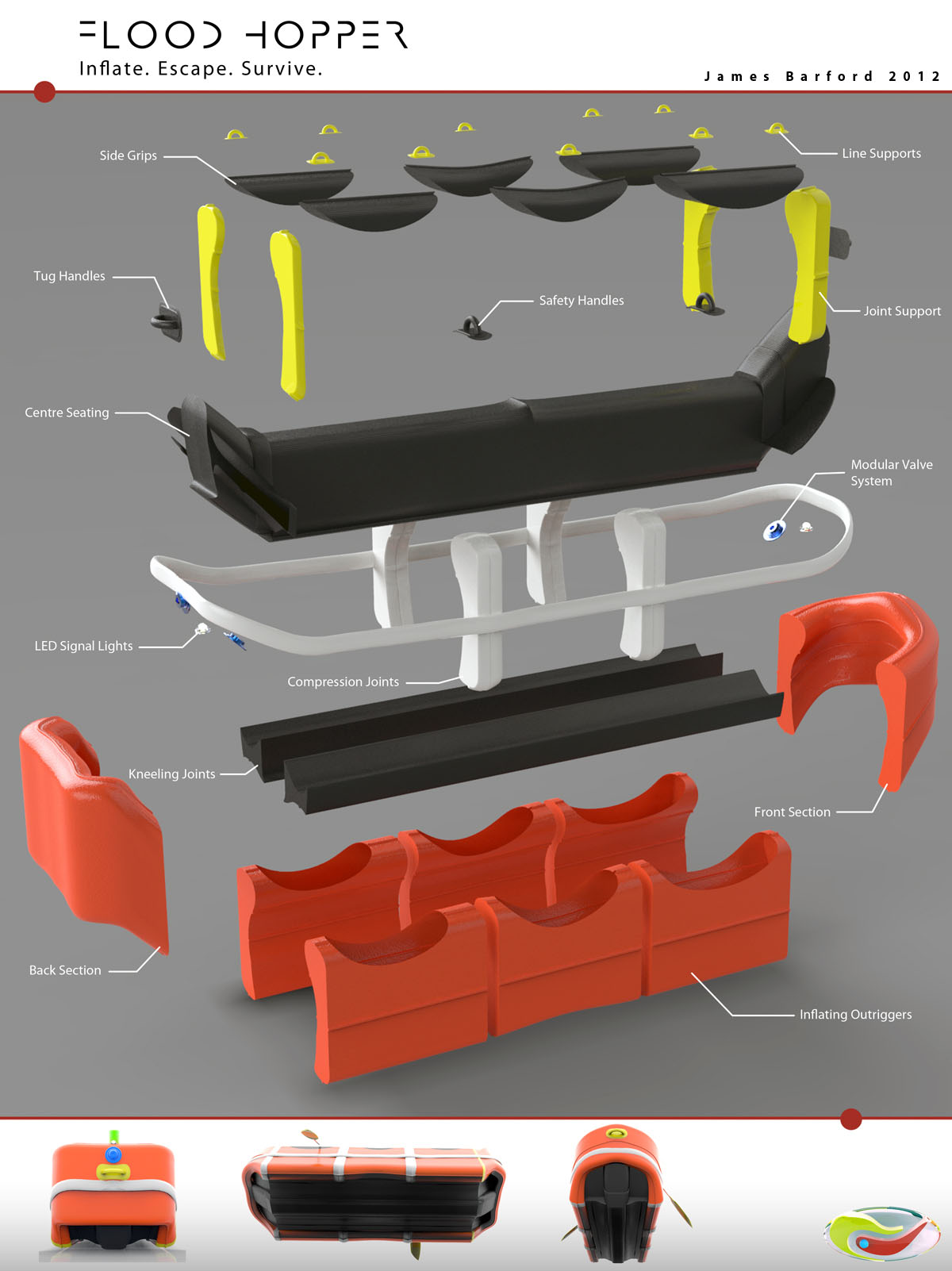
Click above image for bigger view
Tuvie has received “FloodHopper” project from our ‘Submit A Design‘ feature, where we welcome our readers to submit their design/concept for publication.



Something like this would come in handy for most – if not all – flood-prone regions. I’m not saying that things like drains will fail every time it rains, but it doesn’t hurt to be prepared for the worst, now does it?
Very true, although if we had better things to prevent floods, we would not need it at all!
I think those inflatable and connected rafts will be useful for cruise ships. It will make for better safety during emergency situations where passengers need to go overboard for safety. Design and innovation will help cruise liners with survival technology.
They should make having something like this standard procedure for every home within flood-prone areas. It pays to have a back up in case the drains get overwhelmed by water.
Floodhoper can save lot of lives bla
What are the dimensions?
Where is the Flood Hopper sold? I have tried goggling but only find articles written about the Flood Hopper. I live in Southeast Louisiana (enough said 🙂 ) and am very interested in this product. Thanks for your time
It's only a concept at the moment.
Certainly a worthy cause and an interesting design. Having not see the uninflated version, or played with one in water, a few questions or ideas come to mind: 1) Is the seating bar necessary? If not, it is just additional bulk/reduced cargo capacity. If it is a structural component, then disregard. 2) Is there a need to have different bow and stern designs? I would think that having a design which can be used as effectively in either orientation would be much more useful (especially when working in low-light conditions normally associated with floods, especially indoors after power failure).
How much is the flood hopper? where I can make an inquiry in the Phils?
Very interested in purchasing 1 of these.
Would like to purchase and where can I Buy? I was in the historical flood of 2016 in Louisiana and I feel
it will flood again and would like to have one on hand as I don't swim. Please respond to my email if anyone knows where
I can purchase a Flood Hopper Raft. Thank you and God Bless.
Hury and get this Flood Hopper on the market! Make it affordable. This is exactly what I’m looking for. Not a water sports person, but want to be prepared in the event of climate change / emergency flash floods in FL!
(Heaven Forbid!!) Appears Perfect for rescuing Seniors or disabled.
We need you to get this to manufacturing. Hopefully the price will be affordable to those most inflicted by climate change can afford it.
How can I get one?