


Toyota Winglet is a prototype of future personal transportation, Toyota motors has come up with their version of walking assistant. Named as Winglet, it’s a personal transport assistant and is ridden in standing position. It has an electric motor, two wheels and an internal sensor for monitoring the user position. The unique parallel link mechanism allows the users to go forward, backward, and it turns by a simple shift of body weight, thus it comes handy even in crowded places. It ensures stability by making power adjustments and sure is one good walking assistant and suits the purpose for moving around safely and freely. Innovation in personal transportation is good, but this kind of transport will make our generation less walk and fatter.
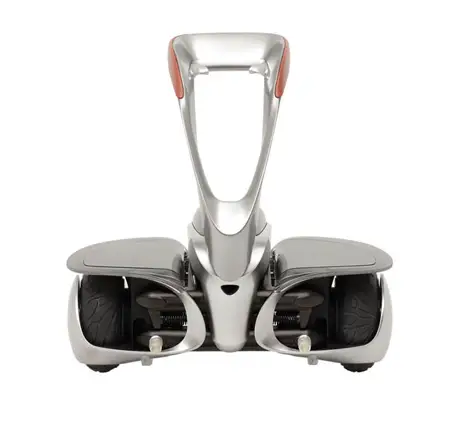
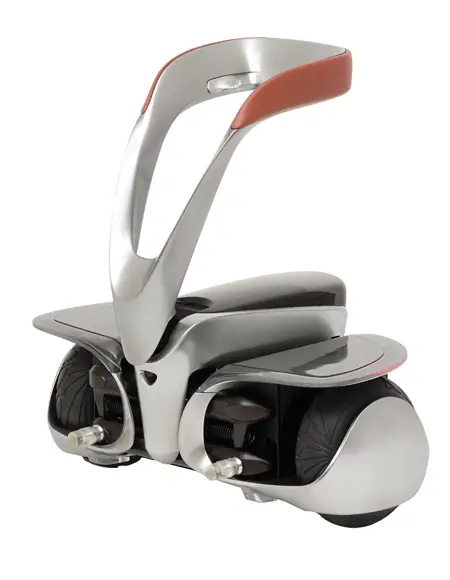
Toyota Develops Personal Transport Assistance Robot ‘Winglet’
Aug 1, 2008 Tokyo — TOYOTA MOTOR CORPORATION (TMC) announced today development of the “Winglet”, a personal transport assistance robot ridden in a standing position.
The Winglet—still being refined—is one of TMC’s people-assisting Toyota Partner Robots. Designed to contribute to society by helping people enjoy a safe and fully mobile life, the Winglet is a compact next-generation everyday transport tool that offers advanced ease of use and expands the user’s range of mobility.
The Winglet consists of a body (with a projected area the size of an A3 sheet of paper) that houses an electric motor, two wheels and internal sensors that constantly monitor the user’s position and make adjustments in power to ensure stability. Meanwhile, a unique parallel link mechanism allows the rider to go forward, backward and turn simply by shifting body weight, making the vehicle safe and useful even in tight spaces or crowded environments.
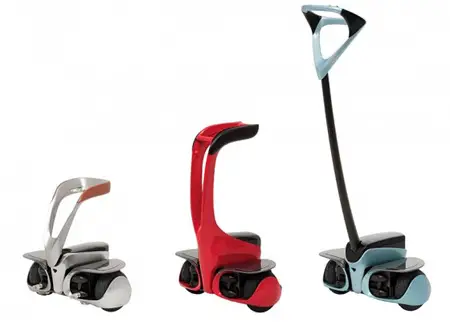
TMC has created three models, the “L”, “M” and “S”, each having different handling features that allow consumers to select a model appropriate to their needs—from “practical” to “hands-free sporty”.
TMC plans various technical and consumer trials to gain feedback during the Winglet’s lead-up to practical use. Practical tests of its utility as a mobility tool are planned to begin in Autumn 2008 at Central Japan International Airport (Centrair) near Nagoya, and Laguna Gamagori, a seaside marine resort complex in Aichi Prefecture. Testing of its usefulness in crowded and other conditions, and how non-users react to the device, is to be carried out in 2009 at the Tressa Yokohama shopping complex in Yokohama City.
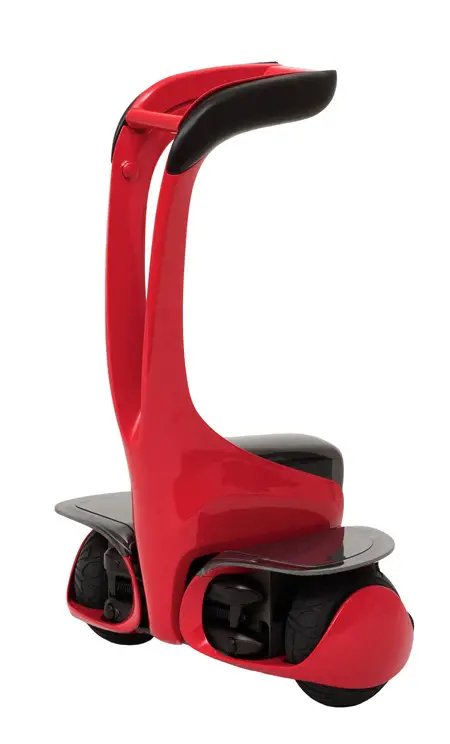
TMC is pursuing sustainability in research and development, manufacturing and social contribution as part of its concept to realize “sustainability in three areas” and to help contribute to the health and comfort of future society. Toyota Partner Robot development is being carried out with this in mind and applies TMC’s approach to monozukuri (”making things”), which includes its mobility, production and other technologies. In a related development, TMC unveiled the “MOBIRO” mobility robot, designed for use in a sitting position, in 2007.
TMC aims to realize the practical use of Toyota Partner Robots in the early 2010s by furthering its robotic development and strengthening collaboration between industry, government and academia.
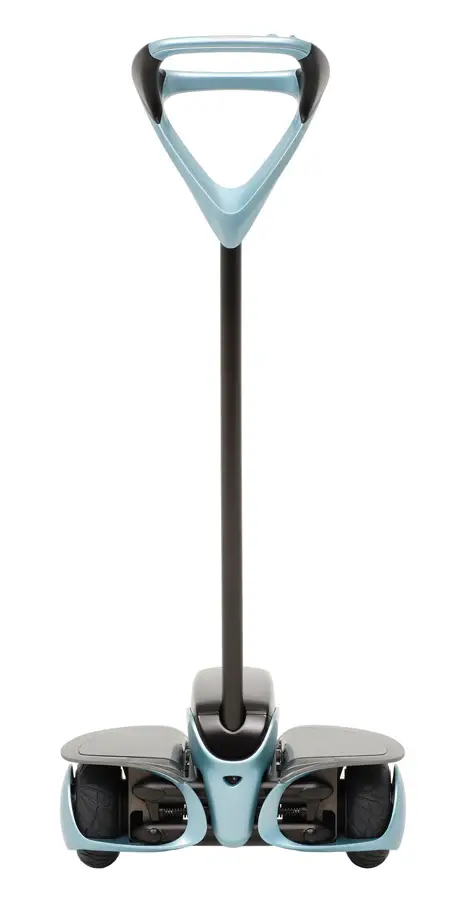
Source : Toyota




Segway?
please i need the price for de stand up car ok
Hello,
My name is Albert is present to you a new bike concept, I hope it likes to
you.
Company name: ASEN INNOVACIO, S.L.
Product name: SSIKE
Product price: 1590€
Website: http://www.ssike.com
Product launch date: September 2012
For more information you can see some videos in youtube: SSIKE
Product description:
New folding bike SSIKE a simple and affordable single person electric vehicle
The market of single person electric transportation is relatively large
but they are often expensive or not easy to handle, here is a new
alternative, the SSIKE.
It works without using gyroscopes – with your own balance – and provides
sensations comparable to those of skiing according to its designers. Only
technical difficulty, management and direction of the rear wheel which is
patented: the front wheel drives and rear wheel is directional.
Simple, the SSIKE still stands out against an electric kick scooter thanks
to its original design.
Spanish product manufactured in Barcelona, this one-person vehicle is
powered by a 250Watt electric motor allowing a maximum speed of 20kph.
Very efficient with a consumption of 6Wh/km its range is announced at 40km
from a 40V and 6Ah LiFePO4 battery.
With 12kg, the SSIKE folds to follow you everywhere easily: subway, train,
apartment or car trunk.