


The Pi electric bicycle uses a semi-automatic 8-speed transmission to downshift into a lower gear for climbing hills, then up shift for rapid acceleration to a maximum of 20 mph on flats and allows you to pedal normally because the motor automatically disengages when not in use. Powered by a 750-watt electric motor housed in the horizontal chain and motor assembly, the Pi electric bicycle is capable of three modes of operation: electric motor power, human power, or the human-electric hybrid power combination. The electric motor and rider utilize the same 8 speed semi-automatic transmission making rapid acceleration from a stop or lower gears available for steep inclines possible (but with slower acceleration.
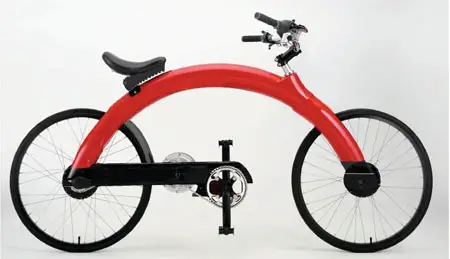
The motor automatically disengages from the pedals when desired so as to preserve battery life. Construction begins with a 12’ foot straight piece of 3⁄8-gauge, aircraft aluminum 6061 alloy that is roll-formed and annealed for uniform wall thickness into a complete 6′ diameter circular tube with a 4″ exterior diameter (the NiMH batteries reside within the tube from the front fork to the seat), which is then bisected to make a 6′ long arc for the bicycle’s frame. The sturdy frame supports riders up to 300 lbs.
The top of the arc provides a 26″ stand over height, allowing you to place both feet on the ground. The padded ergonomic gel seat provides for comfortable, relaxed riding. It attaches to the frame via a gas strut assembly that raises and lowers like a pneumatic office chair, accommodating riders between 5-7′ tall in a semi-recumbent position for ideal pedaling or powered coasting. A dynamo in the front wheel’s hub provides power for auxiliary lighting.
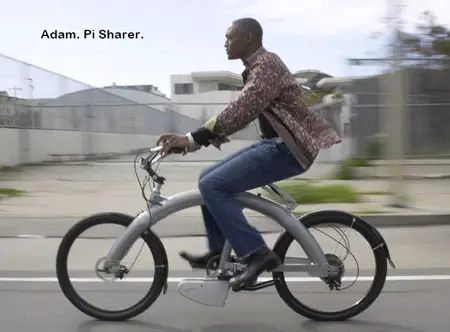
The bicycle has a range of up to 30 miles at 20 mph before requiring a five-hour re-charge from its AC adapter. Precisely tuned hydraulic disc brakes provide sure stops, and the wheels are made of dual-walled aluminum alloy and stainless-steel spokes; the 26″ semi-slick tires are ideal for roads or paved trails and use Presta valves. The bicycle is wet-painted in Rossa Corsa red using the same PPG color specification as high performance sports cars and treated with a clear coat finish for a luster that will last.
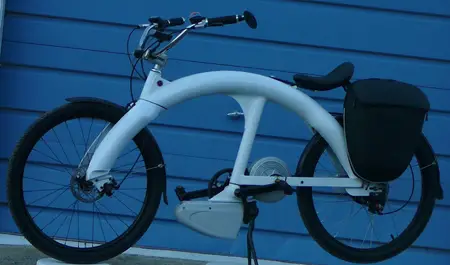
Designer : Marcu Hayes




The 3 wheeler concept might have a great future if the design allows for the use of a variety of fuel types. Aerodynamic stability should be a feature too.
It's a true quality bike everything is worked out up to the detail. But somehow with electric engines and a number of batteries I wonder is it now a Bicycle or a mopet. When you go uphill you need the engine and the batteries because of all the extra weight that they cause not in the least place an over engineered frame (compared to a leight weight racingbike) I find that ironical and it leaves me with a double feeling. But maybe I am too much of a purist.
Regarding the pi electric bike, the article states, "lower gears available for steep inclines possible (but with slower acceleration." This is not correct. Lower gears generally provide better acceleration and easier hill climbing. The easier hill climbing comes at the expense of top speed, not acceleration.
This is because hill climbing and rapid acceleration require the same thing, torque. Low gears provide torque amplification, at the expense of top speed, because you must turn the pedals faster to reach a given speed.
The article also states, "The Pi electric bicycle uses a semi-automatic 8-speed transmission to downshift into a lower gear for climbing hills, then up shift for rapid acceleration"
This is also incorrect. Any race car driver will tell you that if you are going slow and want to accelerate quickly, you shift down, not up. Then when you reach the maximum speed that gear allows, you must shift up.
Similarly on a bicycle, a low gear will provide good acceleration, but once you have reached a speed where your feet cannot go any faster, you must shift up to a higher gear, to gain top speed, at the expense of acceleration and hill climbing.
See: http://en.wikipedia.org/wiki/Gear_ratios
Regarding the pi electric bike, the article states, "lower gears available for steep inclines possible (but with slower acceleration." This is not correct. Lower gears generally provide better acceleration and easier hill climbing. The easier hill climbing comes at the expense of top speed, not acceleration.
This is because hill climbing and rapid acceleration require the same thing, torque. Low gears provide torque amplification, at the expense of top speed, because you must turn the pedals faster to reach a given speed.
The article also states, "The Pi electric bicycle uses a semi-automatic 8-speed transmission to downshift into a lower gear for climbing hills, then up shift for rapid acceleration"
This is also incorrect. Any race car driver will tell you that if you are going slow and want to accelerate quickly, you shift down, not up. Then when you reach the maximum speed that gear allows, you must shift up.
Similarly on a bicycle, a low gear will provide good acceleration, but once you have reached a speed where your feet cannot go any faster, you must shift up to a higher gear, to gain top speed, at the expense of acceleration and hill climbing.
See: http://en.wikipedia.org/wiki/Gear_ratios
Regarding the pi electric bike, the article states, "lower gears available for steep inclines possible (but with slower acceleration." This is not correct. Lower gears generally provide better acceleration and easier hill climbing. The easier hill climbing comes at the expense of top speed, not acceleration.
This is because hill climbing and rapid acceleration require the same thing, torque. Low gears provide torque amplification, at the expense of top speed, because you must turn the pedals faster to reach a given speed.
The article also states, "The Pi electric bicycle uses a semi-automatic 8-speed transmission to downshift into a lower gear for climbing hills, then up shift for rapid acceleration"
This is also incorrect. Any race car driver will tell you that if you are going slow and want to accelerate quickly, you shift down, not up. Then when you reach the maximum speed that gear allows, you must shift up.
Similarly on a bicycle, a low gear will provide good acceleration, but once you have reached a speed where your feet cannot go any faster, you must shift up to a higher gear, to gain top speed, at the expense of acceleration and hill climbing.
See: http://en.wikipedia.org/wiki/Gear_ratios
Regarding the pi electric bike, the article states, "lower gears available for steep inclines possible (but with slower acceleration." This is not correct. Lower gears generally provide better acceleration and easier hill climbing. The easier hill climbing comes at the expense of top speed, not acceleration.
This is because hill climbing and rapid acceleration require the same thing, torque. Low gears provide torque amplification, at the expense of top speed, because you must turn the pedals faster to reach a given speed.
The article also states, "The Pi electric bicycle uses a semi-automatic 8-speed transmission to downshift into a lower gear for climbing hills, then up shift for rapid acceleration"
This is also incorrect. Any race car driver will tell you that if you are going slow and want to accelerate quickly, you shift down, not up. Then when you reach the maximum speed that gear allows, you must shift up.
Similarly on a bicycle, a low gear will provide good acceleration, but once you have reached a speed where your feet cannot go any faster, you must shift up to a higher gear, to gain top speed, at the expense of acceleration and hill climbing.
See: http://en.wikipedia.org/wiki/Gear_ratios
Regarding the pi electric bike, the article states, "lower gears available for steep inclines possible (but with slower acceleration." This is not correct. Lower gears generally provide better acceleration and easier hill climbing. The easier hill climbing comes at the expense of top speed, not acceleration.
This is because hill climbing and rapid acceleration require the same thing, torque. Low gears provide torque amplification, at the expense of top speed, because you must turn the pedals faster to reach a given speed.
The article also states, "The Pi electric bicycle uses a semi-automatic 8-speed transmission to downshift into a lower gear for climbing hills, then up shift for rapid acceleration"
This is also incorrect. Any race car driver will tell you that if you are going slow and want to accelerate quickly, you shift down, not up. Then when you reach the maximum speed that gear allows, you must shift up.
Similarly on a bicycle, a low gear will provide good acceleration, but once you have reached a speed where your feet cannot go any faster, you must shift up to a higher gear, to gain top speed, at the expense of acceleration and hill climbing.
See: http://en.wikipedia.org/wiki/Gear_ratios
Regarding the pi electric bike, the article states, "lower gears available for steep inclines possible (but with slower acceleration." This is not correct. Lower gears generally provide better acceleration and easier hill climbing. The easier hill climbing comes at the expense of top speed, not acceleration.
This is because hill climbing and rapid acceleration require the same thing, torque. Low gears provide torque amplification, at the expense of top speed, because you must turn the pedals faster to reach a given speed.
The article also states, "The Pi electric bicycle uses a semi-automatic 8-speed transmission to downshift into a lower gear for climbing hills, then up shift for rapid acceleration"
This is also incorrect. Any race car driver will tell you that if you are going slow and want to accelerate quickly, you shift down, not up. Then when you reach the maximum speed that gear allows, you must shift up.
Similarly on a bicycle, a low gear will provide good acceleration, but once you have reached a speed where your feet cannot go any faster, you must shift up to a higher gear, to gain top speed, at the expense of acceleration and hill climbing.
See: http://en.wikipedia.org/wiki/Gear_ratios
Awesome concept! Just tell me when they start production and cost, and I'm in line to get mine.
Greetings. i want to place order for one of your
Bicycle for mine use in nigeria.
and also to run the marketing of your stock in my country..
please reply
thanks.
I have been researching for a long time for a best desgine electric bicycle your is what I was looking for I will pay whatever it cost to get my hand of one of them if you put theme on sale I will be grateful if you confirm me about it grate job thanks