National Wildflower Center Competition Winner

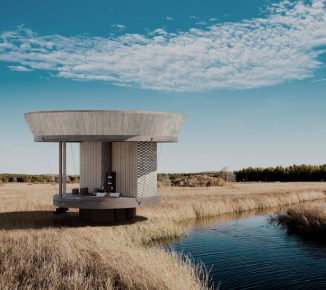
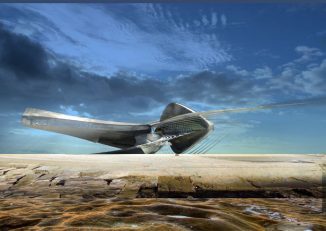
National Wildflower Center organized a competition of designing an innovative, architecturally outstanding educational, conference and seed production compound in Knowsley and Ian Simpson Architects with Hoare Lea Engineers and Adams Kara Taylor Engineers has been declared as winners. Their powerful Fibonacci made spiral solution comprises a remarkable wild flower head focusing the conference center and a memorable and distinctive architectural statement ingeniously combined the design mathematical and organic themes. This compact building is adjacent to the North West border and extends a rounded sweep to the garden of wildflower which welcomes the visitors by its intimate internal and external ante spaces.

This innovative concept of Ian Simpson Architects will become a groundbreaking “green” exemplar, a favorite conference and visitor’s destination and an inspiring resource of mathematics education. The Fibonacci spirals will allow placing seeds on the seed head, leaves on a stem and petals on a flower as well as will help people to understand the relationships between nature and mathematics. The structure of entering the flower head will be an encouraging experience over the countries by showing how architects, artists and engineers have used the numerical sequences and simple angles found in wildflowers. This design is now being considered as an excellent addition to the National Wildflower Center.

wildflower centre competition winner

wildflower centre competition winner

Designer : Ian Simpson Architects, Adams Kara Taylor Engineers, and Hoare Lea Engineers via [Bustler]


Advertisement


After The Post Office : Re-Imagining New Services, New Contexts

After the post office is a product concept that is designed during the 3 years BA Hons. marketing course. This product design is an efficient concept design that will introduce new service contexts aiming to provide a service that can replace the conventional post offices. This concept follows few steps to accomplish its objective. The mobile segment is transported to the desired location by van and trolley is being used to move it. After reaching the destination, the mobile segment is pushed to the post box. The display monitor will show if the user would like to lock on with the box. This locking mechanism will make the box more secured.

after the post office

after the post office

Read the rest of this entry »

Hotelicopter : The World’s First Flying Hotel

The owner of Hotelicopper has been trying to create the world’s largest helicopter as well as the world’s first flying hotel by modifying a Soviet-made Mil V-12 since 2004. This massive flying machine features everything from room service and private entertainment systems to extras like yoga classes, tea garden, spa treatment, gaming and many others that someone would anticipate from a 5-star hotel. With the length of 42m and 14m of height, this giant aircraft can fly with a maximum weight of 232,870 lb. Maximum speed of this flying hotel is 255 km/h and expected cruising speed is 237 km/h.

hotelicopter world's first flying hotel

hotelicopter world's first flying hotel

Read the rest of this entry »

LifeLink Modular Shelter for Various Disaster Situations

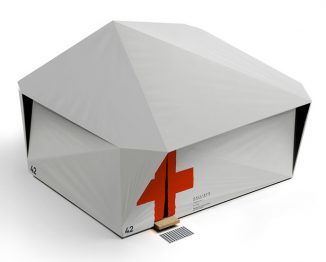
Community values are the main inspiration of the LifeLINK Modular Shelter. Each of them is prepared of 1000 denier nylon walls with self skinning foam. During manufacturing, the shelters are vacuum packed. So when the parcel is ripped open, it inflates itself slowly. Then multiple units are zipped together through side flaps in order to form bigger units and a Velcro and a plastic sheet covers it. By doing this, it generates a central “sunroom” and people of the smaller units can access it. Ease of use merged with visual form and functionality has made these LifeLINK Modular Shelter an ideal selection in various disaster situations.

life link modular shelter

life link modular shelter

Read the rest of this entry »

Seawater Vertical Farm in Dubai by StudioMobile

Studiomobile, an Italian architectural firm, have been working during the last couple of years in the United Arab Emirates and their most recent development is the concept seawater vertical farm. Their design, the Seawater Vertical farm utilizes seawater to keep cool and moisten greenhouses and to transform enough humidity back in to water to irrigate the plants. This project would be very much helpful where the supply of fresh water is limited and not much local cultivations are taking part. This project is very expensive but has been considered feasible because of the urban transport problem and the high soil value.

seawater vertical farm

seawater vertical farm

Read the rest of this entry »